Help the people you love stay safe at home for longer.
Dorris uses small, discreet sensors to notice changes in daily routines and quietly let you know when something seems different. No cameras. No microphones. Just quiet reassurance.
You start to notice small things
It rarely happens all at once. It's the small shifts that stay with you.
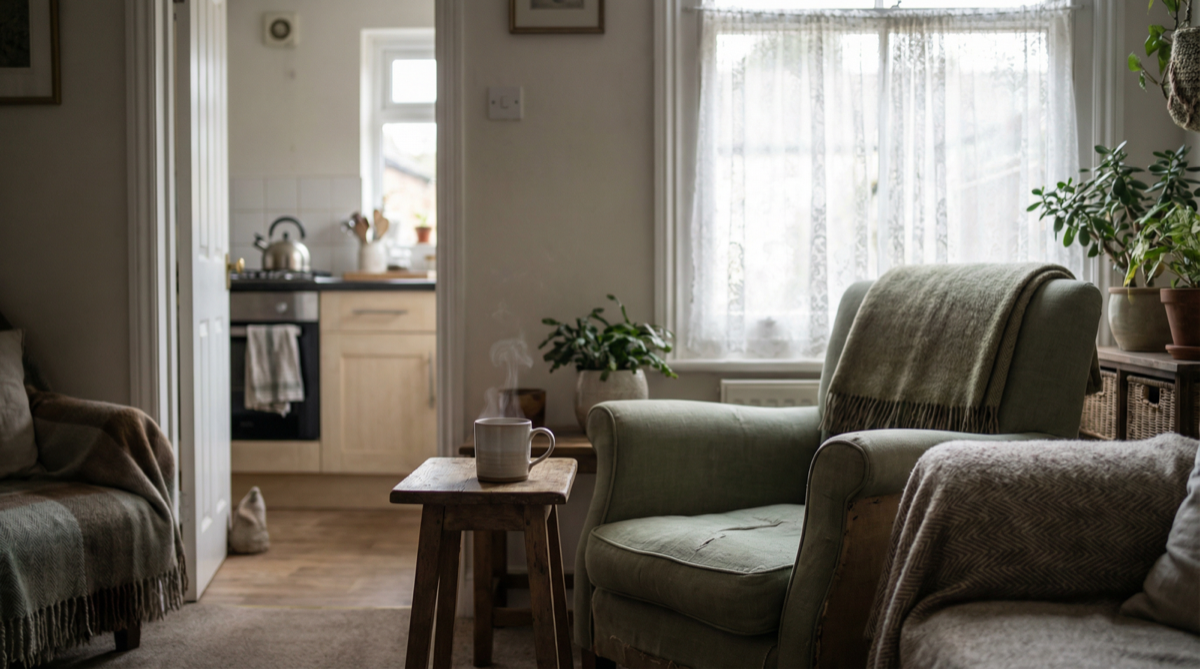
The kettle that used to be on by seven. The curtains that stay closed a little longer than they used to. The heating that wasn't turned on, even though it was cold. The phone call where something just didn't sound quite right.
You might not be able to name exactly what's changed. But you feel it. A quiet worry that sits with you after every visit, every phone call. You don't want to overreact — but you don't want to miss something either.
Dorris was built for exactly this moment. Not for emergencies. For the space between "everything's fine" and "I wish I'd known sooner."
How Dorris works
Three simple steps. No complexity, no fuss.
We learn the routine
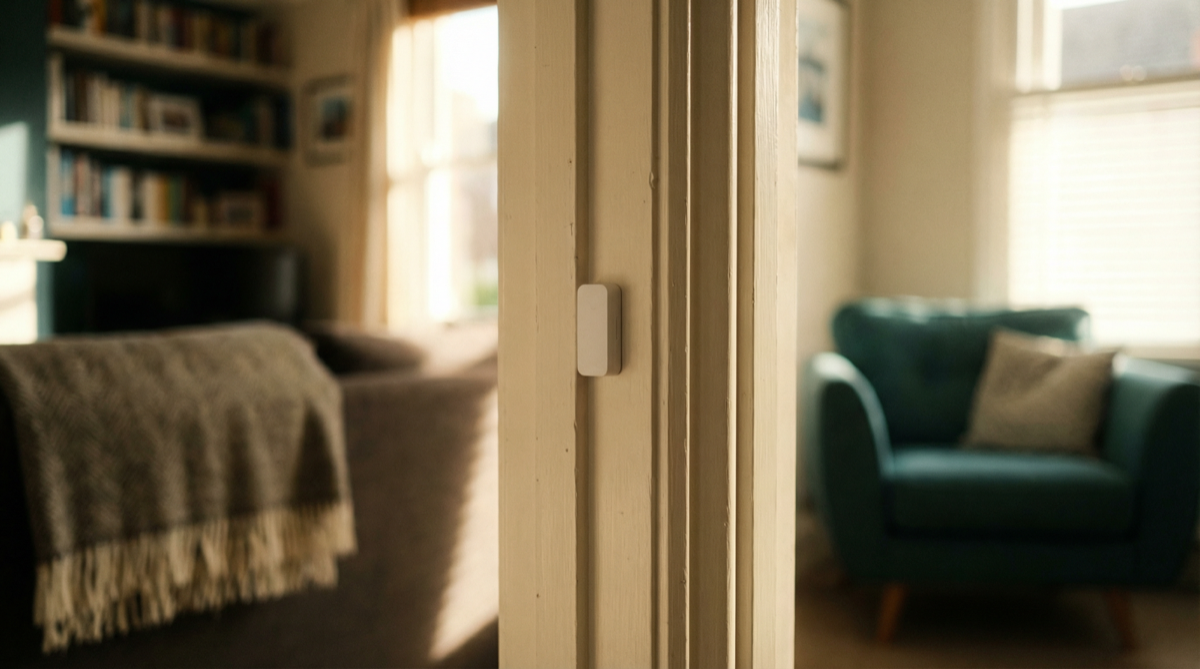
Small, discreet sensors are placed around the home. Over a couple of weeks, Dorris quietly learns the natural rhythm of the day — when the kettle goes on, when doors open and close, when lights come on.
Dorris notices changes
If patterns start to shift — the kettle isn't used by its usual time, there's less movement than normal, the heating hasn't come on — Dorris picks up on it. Softly and without fuss.
Family gets a heads-up
You receive a gentle notification — not an alarm, not a siren. A calm heads-up that something might be worth checking on. Then you decide what to do next.
The everyday things Dorris pays attention to
Dorris doesn't track people — it notices the rhythms of daily life.
Kettle and appliance use
The kettle going on in the morning can say a lot. Dorris notices whether everyday appliances are being used as usual — a simple but telling sign that the day has started normally.
Front door activity
Whether the front door has opened — perhaps for a morning walk, a visitor, or to bring in the milk. If it stays closed all day when it normally wouldn't, that might be worth knowing about.
Movement around the home
Dorris notices general movement patterns — not where someone is standing, but whether there's the usual level of activity in the home. Less movement than normal can sometimes highlight a change.
Light and curtain patterns
Lights coming on in the evening, curtains being opened in the morning — these are the small habits that shape a day. When they don't happen as expected, it can be a subtle signal that something's different.
Room temperature
A home that's too cold — or too warm — can be a concern, especially in winter. Dorris keeps a quiet eye on temperature so you can be sure the heating is doing its job.
Bathroom presence
A presence sensor in the bathroom can notice if someone has been in there longer than usual — particularly important overnight, when most toileting-related falls happen. No camera, no microphone — just awareness that something may need checking.
Why a presence sensor in the bathroom matters
Falls are one of the biggest risks to older people living independently. The bathroom is where many of them happen.
1 in 3 adults over 65 fall each year. For those over 80, it rises to 1 in 2.
Research shows that around 1 in 5 falls result in what's known as a "long lie" — being on the floor for more than an hour. Many of those falls happen at night, and many happen during trips to the bathroom.
Perhaps the most striking finding: in one UK study, 97% of people who experienced a long lie and had a traditional call alarm did not press it. They may have been confused, in pain, or simply unable to reach the button.
This is exactly why Dorris includes a presence sensor in every bathroom. If someone has been in the WC for longer than usual — especially in the middle of the night — Dorris notices. No button to press, no wearable to remember. Just quiet, automatic awareness that something may need attention.
The numbers
-
219,000+
Emergency hospital admissions due to falls in over-65s in England (2023/24) -
1 in 5
Falls in over-65s result in a "long lie" of more than an hour -
14%
Of falls are toileting-related, with most happening overnight -
97%
Of call alarm users who experienced a long lie did not press their alarm -
70,000+
Hip fractures per year in England, Wales and Northern Ireland
Sources: NICE/OHID, NHS Digital, BMJ, National Hip Fracture Database. Dorris does not claim to prevent falls — these figures illustrate why passive, automatic monitoring matters.
Why no cameras?
Because your mum's home is her home. Not a facility. Not a ward. Her home.
Cameras change how a space feels. They shift a home from a place of comfort into a place of observation. Even if no one's watching the feed, the knowledge that they could is enough to change things.
Dorris takes a fundamentally different approach. We notice patterns, not moments. We know the kettle was used — not what someone was wearing when they made their tea. We know the front door opened — not who was standing there.
That's an important distinction. It's the difference between care and surveillance.
What Dorris offers families
You can't be there every moment. But you can stay connected.

Peace of mind
That quiet reassurance that comes from knowing the day has started normally. The kettle's been on. There's been movement. Things seem alright.
Earlier awareness
Gradual changes can be hard to spot, especially from a distance. Dorris can highlight shifts in routine before they become bigger concerns.
Connected without hovering
Stay involved in your parent's wellbeing without feeling like you're checking up on them. Dorris gives you a quiet window into the day, not a surveillance feed.
Reduced uncertainty
No more driving over because you couldn't get through on the phone. No more wondering if everything's alright. Dorris helps fill the gaps between visits.
Supporting independence
Dorris helps make staying at home viable for longer. Not by adding constraints, but by providing a quiet safety net that supports the independence your loved one values.
For the person at home
Dorris is designed to fit quietly into life, not to change it.
Home stays home
No visible cameras, no blinking lights, no wearable devices. The sensors are small and discreet. The home still feels like home — because it is.
Dignity preserved
There's no feeling of being watched. No awkwardness about getting dressed, having a nap on the sofa, or just going about the day. Privacy is built in from the start.
No behaviour change needed
There's nothing to wear, nothing to charge, nothing to press. Dorris works in the background. Your loved one just carries on living their life exactly as they always have.
Keeps independence
Most older people want to stay in their own home. Dorris supports that by providing a quiet safety net — one that helps families feel confident that staying at home is still the right choice.
Families like yours
These are some of the situations where Dorris can help.
Your mum lives alone and you live an hour away
You visit when you can, but the weeks in between are long. You ring every day, but some days the phone just rings out. Dorris gives you a quiet way to know the day has started — without having to call and check.
Dad's been a bit forgetful lately
It's nothing dramatic — a missed appointment, the same story twice, the heating left off. But it's enough to make you wonder. Dorris can help you see whether daily routines are holding steady, or whether things are slowly shifting.
Mum came home from hospital last month
She's on the mend, but the first few weeks at home can feel uncertain. Is she getting up and about? Is the house warm enough? Dorris can offer an extra layer of reassurance during that vulnerable time.
You share caring responsibilities with siblings
Coordinating between family members is hard. Dorris gives everyone a shared view — so conversations about Mum or Dad are based on information, not assumptions or guilt.
What Dorris is — and what it isn't
Dorris is
-
A supportive safety net
An extra layer of awareness that helps families stay connected and informed about their loved one's daily wellbeing.
-
Professionally installed and supported
We take care of set-up and provide ongoing support so you don't have to worry about the technical side of things.
-
Privacy-first by design
No cameras, no microphones, no video, no audio. Patterns, not moments. That's the principle everything is built on.
Dorris is not
-
A replacement for emergency services
Dorris is not a panic button or an emergency response system. If someone needs immediate help, always call 999.
-
A substitute for carers or medical advice
Dorris supports care — it doesn't replace it. If your loved one needs in-person care, a carer, or medical support, Dorris works alongside those arrangements, not instead of them.
-
A surveillance system
There are no cameras, no microphones, and no way to watch or listen. Dorris notices patterns — it does not observe people.
Built by people who understand
Dorris was created by two friends who saw a gap between worry and action.
Dorris was founded by Andrew Taylor and Ricky Beaty — long-time friends with a shared belief that technology should serve people, not complicate their lives.
Both are of an age where their own parents are getting older. And both know many friends and family members who are caring for older or vulnerable adults who — quite understandably — want to stay in their own homes.
Andrew has spent his entire career in education and healthcare technology, building products that make a real difference in people's lives. Ricky brings deep experience in cloud infrastructure, hosting, and home-care technology — the kind of hands-on technical knowledge that makes a system like Dorris reliable, secure, and resilient.
Together, they're building Dorris because they believe that the space between "everything is fine" and "we need to do something" deserves a better answer than cameras, panic buttons, or waiting for a crisis.

Be one of the first families to try Dorris
We're looking for a small number of families to help us shape Dorris during our beta programme. If you're selected, you'll receive the full Dorris system — installed and supported — completely free, forever.
Join the Beta ProgrammeGet in touch
We're currently looking for beta testers to help shape Dorris. Register your interest below and we'll be in touch for a friendly conversation about whether Dorris could work for your family.
Thank you for getting in touch.
We've received your message and will be in touch soon. Our support hours are Monday to Friday, 9am to 5pm.